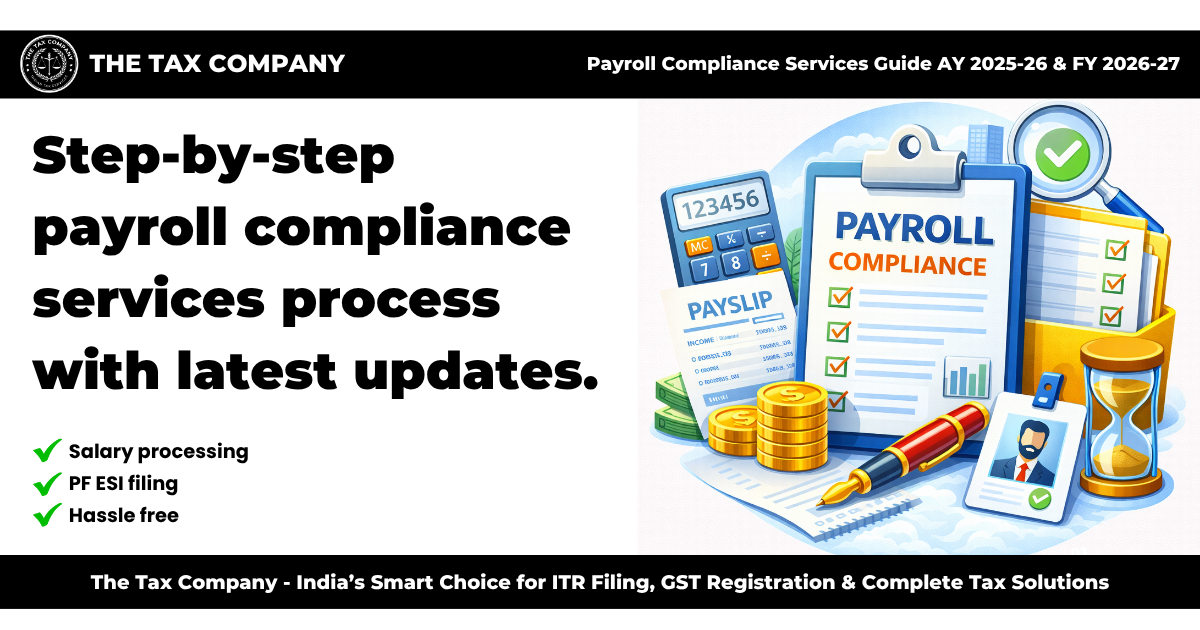
Payroll Compliance Services Guide AY 2025-26 & FY 2026-27
Introduction
Payroll compliance is a critical aspect of managing employees and ensuring that businesses adhere to labor laws, tax regulations, and statutory requirements. It involves accurate salary processing, tax deductions, and timely filings.
For Assessment Year (AY) 2025-26 and Financial Year (FY) 2026-27, businesses must ensure proper payroll compliance to avoid penalties, maintain employee satisfaction, and ensure smooth operations.
This guide provides a complete overview of payroll compliance services.
What is Payroll Compliance?
Payroll compliance refers to the process of managing employee salaries while complying with applicable tax laws, labor regulations, and statutory requirements.
It includes salary calculations, deductions, tax filings, and reporting obligations.
Key Components of Payroll Compliance
- Salary calculation and processing
- TDS deduction on salaries
- Provident Fund (PF) compliance
- Employee State Insurance (ESI) compliance
- Professional Tax (PT) deduction
- Bonus and gratuity compliance
Who Needs Payroll Compliance Services?
Payroll compliance is required for:
- Companies and startups
- Partnership firms and LLPs
- Small and medium enterprises (SMEs)
- Businesses employing staff
Statutory Registrations Required
Businesses may need:
- TAN for TDS deductions
- PF registration (EPFO)
- ESI registration (ESIC)
- Professional Tax registration (state-specific)
Documents Required for Payroll Management
- Employee details and KYC documents
- Salary structure details
- Attendance and leave records
- Bank account details of employees
- Investment declarations
Step-by-Step Payroll Compliance Process
Step 1: Employee Data Collection
- Gather employee details and documents
Step 2: Salary Structure Setup
- Define salary components and benefits
Step 3: Monthly Payroll Processing
- Calculate salary, deductions, and net pay
Step 4: Statutory Deductions
- Deduct TDS, PF, ESI, and PT
Step 5: Salary Disbursement
- Transfer salaries to employee accounts
Step 6: Filing Returns and Reports
- File TDS returns, PF returns, and other compliances
Compliance Requirements
- Monthly TDS deduction and payment
- Quarterly TDS return filing
- PF and ESI monthly filings
- Issuing Form 16 to employees
- Maintaining payroll records
Benefits of Payroll Compliance Services
- Ensures legal compliance
- Avoids penalties and fines
- Improves employee satisfaction
- Accurate salary processing
- Saves time and resources
Common Mistakes to Avoid
- Incorrect salary calculations
- Delay in statutory payments
- Non-compliance with labor laws
- Incomplete employee records
- Missing filing deadlines
Tips for Effective Payroll Management
- Maintain accurate employee records
- Use payroll software or professional services
- Track compliance deadlines
- Regularly update salary structures
Role of Professional Assistance
Professional assistance can help:
- Manage end-to-end payroll processing
- Ensure compliance with laws
- Avoid penalties and errors
- Provide accurate reporting
Conclusion
Payroll compliance is essential for smooth business operations and legal adherence. Proper management ensures accurate salary processing and compliance with statutory requirements.
For AY 2025-26 and FY 2026-27, businesses should prioritize payroll compliance to maintain efficiency and avoid legal complications.
Need Help with Payroll Compliance Services?
The Tax Company (TTC) provides expert payroll compliance services. Our team ensures accurate salary processing and timely compliance with all regulations.
Contact us today for professional support.